About Vertical Roller Mill
Application of Vertical Roller Mill
Vertical mill are suitable for huge capacity producing widely used in grinding nonflammable and nonexplosive materials under 93the Mohs hardness such as quartz feldspar calcite talcum barite fluorite iron ore copper ore quartz especially for slag cement clinker zircon sand fly ash and carborundum coal etc
Working Principle of Vertical Roller Mill
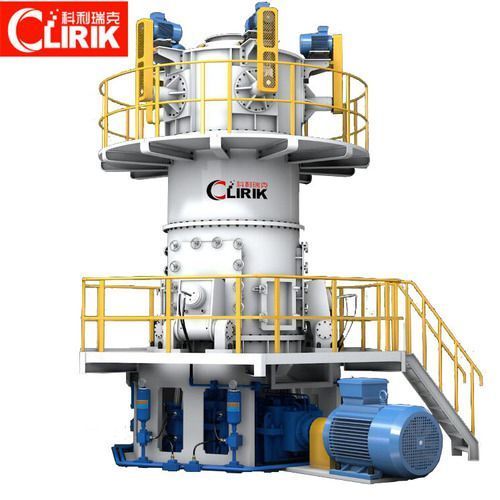
The grinding disc is driving by motor through reducer The material falls to grinding disc from the feed opening The materials are driven to the edge of disc by the centrifugal force and crushed into fine powders by rollers Then the hot air from the nozzle take the fine powder to high efficiency classifierThe qualified powder are taken by the air to the powder collector to be collected while the unqualified powder are sent back for regrinding
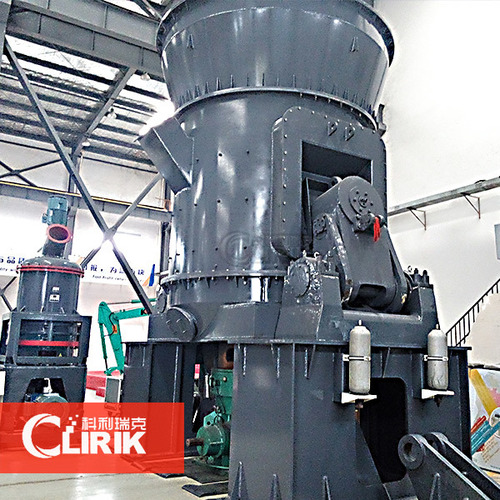
Professional 2300 TH Large Capacity Vertical Roller Mill
Advantages of Vertical Roller Mill
High grinding efficiency save 2030 power consumption compared with the ball mill With the increasing of moisture content it can save more and more electricity
Strong drying capacity dry and grind raw materials with moisture content as much as 15
Mutifunction crushing drying grinding separating and conveying
Low noises and little dust no direct contact between the grinding rollers and grinding disc so metallic impact is avoided and its noises is 2025 decibels lower Totally closed negative pressure operation has employed by this vertical grinding mill so there is no dust during the operation
Low wear rate and little metallic pollution its metal wear is only 510gt
High Efficiency and Precision GrindingEngineered for superior powder production, the Vertical Roller Mill delivers consistent grind sizes from 80 to 325 mesh. Adjustable grinding speeds, customizable table size, and sophisticated PLC controls give mills in the LM series exceptional precision and adaptability to a range of materials. Its robust design allows sustained operation in demanding settings such as cement plants or metallurgy works.
Advanced Safety and Environmental ProtectionThis roller mill integrates a hydraulic overload protection system for operator and machine safety, alongside a centralized or automatic lubrication system for smooth running. A built-in dust collection system ensures compliant emissions and a clean working environment. The mill operates quietly (85 dB(A)), aligning with modern industry safety and environmental mandates.
Low Maintenance, Long Service LifeWith wear-resistant components and automatic lubrication, downtime and maintenance costs are minimized. The cast steel shell and linear guideway design contribute to durability and stable long-term performance, while onsite after-sales support ensures smooth installation and trouble-free operation for years.
FAQ's of Vertical Roller Mill:
Q: How does the vertical roller mill support different applications like cement, coal, and non-metallic minerals?
A: The LM series vertical roller mill accommodates various materials such as cement clinker, coal, and non-metallic minerals through adjustable table size, grinding wheel speed, and roller configuration, allowing it to precisely meet the processing needs for each industry.
Q: What are the main steps involved in operating and maintaining this roller mill?
A: Operation involves automatic or PLC-based controls to adjust feeding, grinding, and product fineness. The integrated dust collector and centralized lubrication lessen manual workload, while hydraulic overload protection ensures safe running. Scheduled checks on wear parts and lubrication help maintain long service life.
Q: When is onsite after-sales support typically required?
A: Onsite support is most valuable during installation, commissioning, and whenever technical issues arise that cannot be resolved remotely. The manufacturer offers this service to ensure optimal mill operation and minimal downtime.
Q: Where can this vertical roller mill be installed, and what space does it require?
A: Designed for floor-mounted installation, the standard space requirement is approximately 8800 x 4700 mm. The mill's vertical arrangement allows for a compact footprint even in facilities with limited floor space.
Q: What are the benefits of the integrated dust collection and noise control systems?
A: The built-in dust collector minimizes airborne particulates, ensuring a cleaner, safer workplace and regulatory compliance. Low noise levels (85 dB(A)) support a more comfortable environment for operators and reduce the need for extensive sound insulation.
Q: How does the automatic PLC control system improve usage and process efficiency?
A: Automatic PLC controls allow for real-time monitoring, precise process adjustments, and automated operation, enhancing consistency, reducing labor requirements, and optimizing energy use for high efficiency.
Q: What is the typical service life of critical components, and how is durability ensured?
A: Key wear parts are constructed from high-strength materials and designed for long life. Centralized/automatic lubrication, robust cast steel housing, and regulated operation extend service intervals and guarantee dependable performance over time.





 Send Inquiry
 Send Inquiry


 Send Inquiry
 English
 Spanish
 French
 German
 Italian
 Chinese (Simplified)
 Japanese
 Korean
 Arabic
 Portuguese